
The Other Side of Cappadocia
If the northern valleys of Cappadocia are about spectacle — towering fairy chimneys, painted cave churches, panoramic castle summits — the south is about depth, both literal and figurative. The Cappadocia South Tour takes you underground into multi-storey cities carved from volcanic tuff, through valleys stained in shades of rose and vermillion, past an abandoned Greek settlement clinging to a cliff face, and finally to a sunset viewpoint that will redefine your understanding of the word “panorama.” This is Cappadocia’s contemplative side, and it rewards the curious traveller with experiences that the more famous northern circuit simply cannot offer.
Morning pickups cover hotels in Göreme, Ürgüp, Avanos, and Uçhisar. Your licensed guide speaks fluent English and carries a genuine passion for the less-visited corners of the region.
Red Valley — Walking Through a Painting
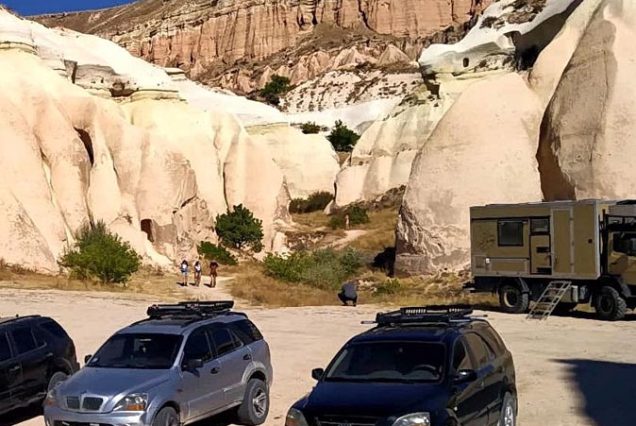
The tour opens with a moderate hike through the Red Valley (Kızılçukur), one of Cappadocia’s most visually striking landscapes. The valley takes its name from the iron-oxide-rich tuff that lines its walls, glowing in shades that shift from salmon pink at midday to deep crimson in the golden hour. The trail winds past rock-cut churches — some with fragments of frescoes still visible — ancient pigeon houses, and eroded pinnacles whose shapes change with every bend in the path.
The walk is approximately three kilometres and takes about an hour at a comfortable pace. Your guide will stop at key points to explain the geology — how the layers of differently coloured tuff correspond to separate volcanic eruptions separated by millions of years — and to point out the small vineyard terraces where local farmers still cultivate grapes for Cappadocia’s emerging wine industry. The combination of physical activity, geological education, and sheer visual beauty makes the Red Valley hike the most memorable segment of the South Tour for many visitors.
Çavuşin Village — Frozen in the 20th Century
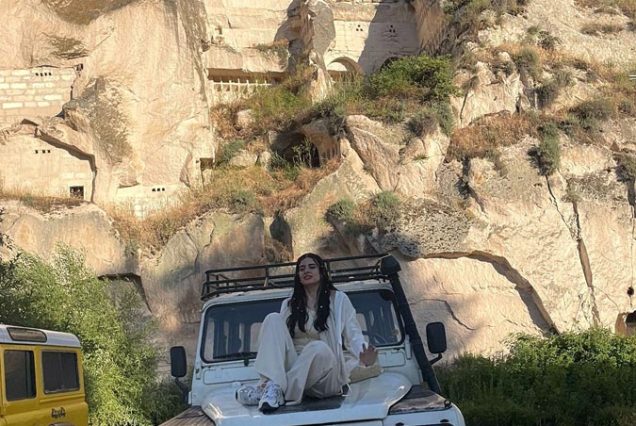
Çavuşin is a village split in two. The modern settlement sits on flat ground near the main road; the old village — the one you’ll visit — is a ghost town carved into a crumbling cliff face on the opposite side of the valley. Greek-speaking Christians lived in these rock-cut houses until the population exchange of 1923, and the abandoned settlement has been slowly dissolving back into the landscape ever since.
Climbing the rough paths between the old houses is an exercise in archaeological imagination. Doorways open onto rooms with carved niches and fireplaces; a large basilica-plan church near the summit contains faded frescoes and a view that explains why the original inhabitants chose this particular cliff. The settlement’s gradual collapse adds an element of poignancy: every year, a few more rooms surrender to gravity, and the cliff face simplifies a little further. Visiting now, while the structures are still legible, feels like a privilege.
Pigeon Valley — The Fertile Cliffs
Between Uçhisar and Göreme lies Pigeon Valley (Güvercinlik Vadisi), a long, narrow gorge whose cliff faces are riddled with thousands of carved niches. These are pigeon houses — small chambers designed to attract rock doves, whose nitrogen-rich droppings were collected and used as fertiliser on the valley’s orchards and vineyards. The practice dates back at least to the Byzantine period and continued well into the 20th century.
The pigeon houses are often painted with white-washed fronts and decorative patterns to attract the birds. From the valley’s rim, the effect is striking: a patchwork of geometric shapes carved into otherwise natural rock, evidence of a farming technique so elegant that it required no energy input beyond the pigeons’ daily routine. Your guide will explain the ecological logic of the system and point out how it supported the remarkably productive agriculture that sustained Cappadocia’s cave-dwelling communities for centuries.
Kaymaklı Underground City — Eight Storeys Beneath the Earth
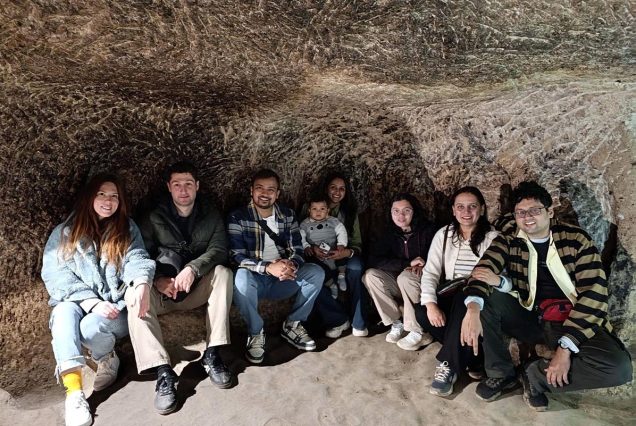
The headline attraction of the South Tour is Kaymaklı, one of Cappadocia’s deepest and most complex underground cities. Carved into the soft tuff beneath an otherwise unremarkable village, Kaymaklı descends eight storeys below ground level and could shelter an estimated 3,500 people along with their livestock, food stores, and water supplies. Only four levels are currently open to visitors, but those four levels are enough to convey the staggering ambition of the project.
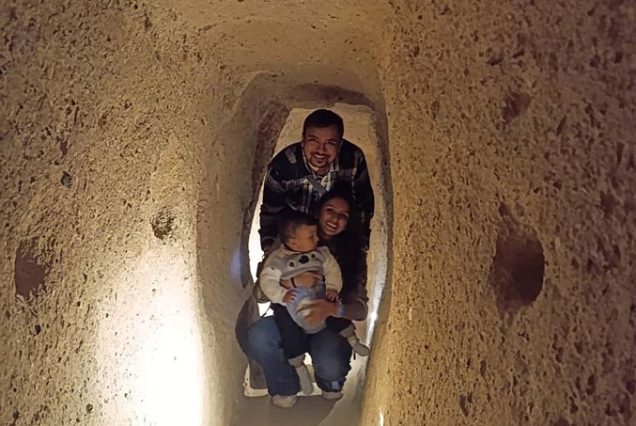
Descending through narrow tunnels, you’ll pass ventilation shafts that still draw air from the surface, circular millstone doors that could be rolled shut to seal off entire sections, wine cellars with stone troughs for crushing grapes, and communal kitchens with soot-blackened ceilings. The underground cities were built as refuges — places to hide during raids by Arab armies, Mongol horsemen, or bandits — and every architectural detail reflects the twin priorities of survival and self-sufficiency.
The tunnels are well-lit and the route is clearly marked, but the ceilings are low in places. Your guide will manage the pace, ensuring you have time to absorb the scale of what human hands achieved with nothing more than iron chisels and determination. Kaymaklı is, by any measure, one of the most extraordinary feats of subterranean engineering on the planet.
Sunset Viewpoint — The Day’s Last Gift
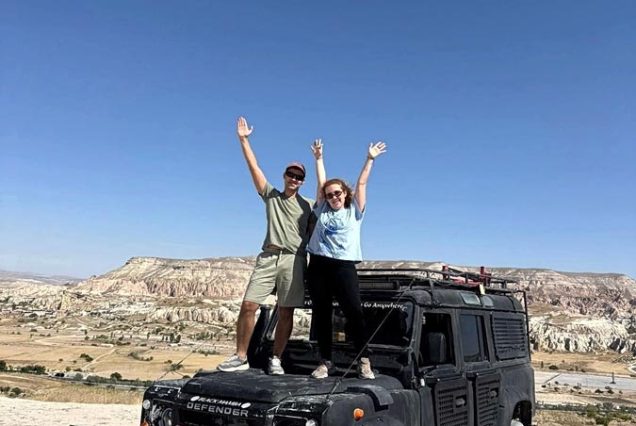
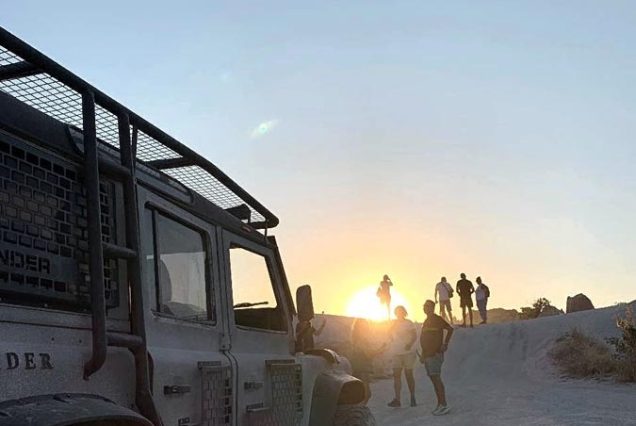
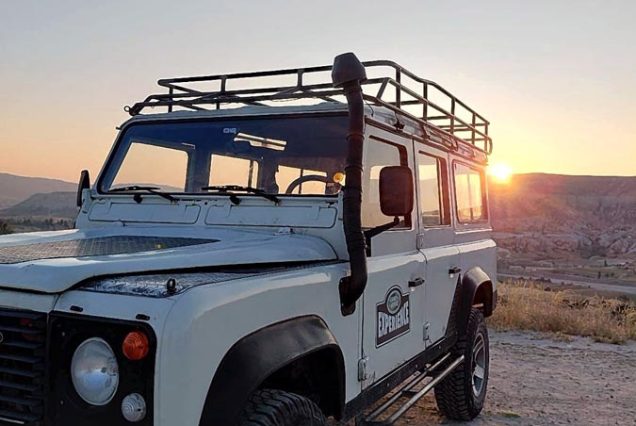
The South Tour saves its most purely beautiful moment for last. As the afternoon light begins to deepen, the vehicle climbs to a sunset viewpoint overlooking the valleys you’ve spent the day exploring. The volcanic tuff, which can look bleached and harsh under midday sun, transforms in the golden hour: Red Valley lives up to its name, Pigeon Valley glows amber, and the fairy chimneys cast long shadows across the basin floor. It’s a meditative end to a day that has taken you from subterranean darkness to the widest possible sky.
Pairing the South Tour
The South Tour is the natural complement to the Cappadocia Red Tour or the Cappadocia North Tour, both of which focus on the northern valleys and their fairy chimneys. Together, the two days give you comprehensive coverage of Cappadocia’s geological and cultural heritage. For travellers with only a single day, the Cappadocia Highlights Tour compresses the northern essentials into one premium itinerary.
You May Like
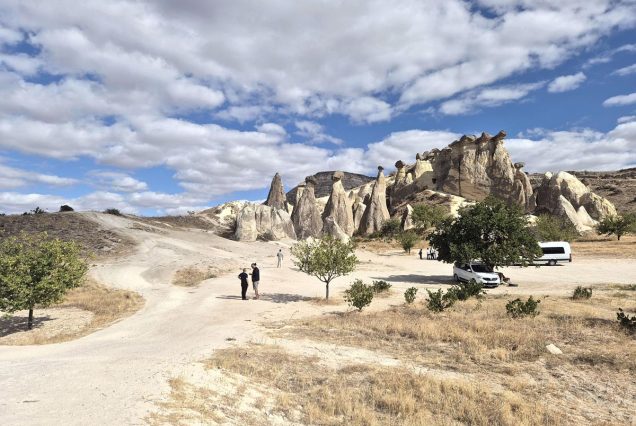
Cappadocia Red Tour
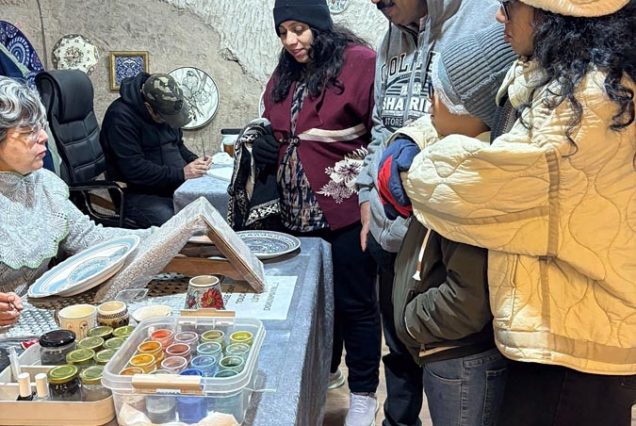
Cappadocia Highlights Tour
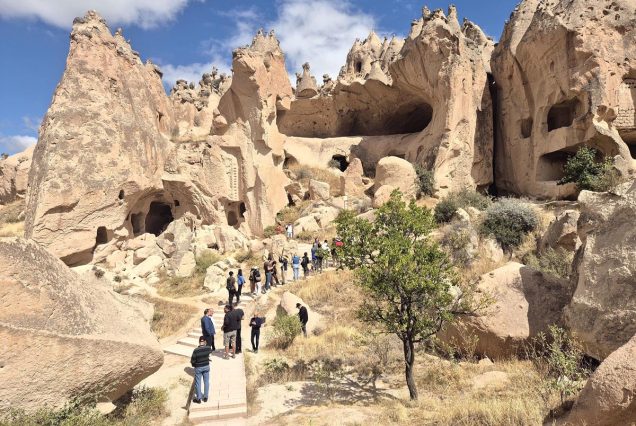
Cappadocia Mix Tour
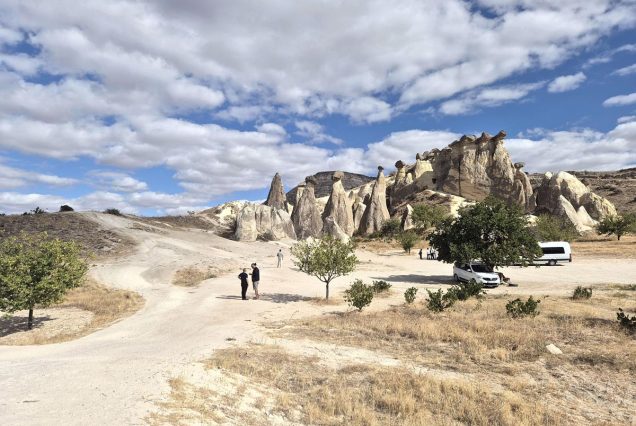
Cappadocia North Tour
Reviews
There are no reviews yet.