
Two Routes, One Unforgettable Day
Cappadocia’s classic touring itineraries are traditionally divided into a “north” route and a “south” route, each filling a full day. The Cappadocia Mix Tour breaks that convention by cherry-picking the standout stops from both circuits and weaving them into a single, well-paced programme. The result is a day that covers more thematic ground than either route alone — geological spectacle, abandoned settlements, phallic rock pillars, artisan workshops, and sweeping valley panoramas — without the frantic pace you might expect.
Pickups start early from hotels across the Göreme, Ürgüp, Avanos, and Uçhisar area. Your guide meets you at the vehicle with a quick briefing on the day’s sequence, and then you’re off into the Cappadocian dawn.
Devrent Valley — Where Geology Plays Tricks
The opening act is Devrent Valley, a dry canyon whose rock formations have been eroded into uncanny shapes by millennia of wind and water. There are no churches here, no historical placards — just raw geology performing its slowest magic trick. Your guide will introduce the famous “camel rock,” but the valley rewards those who linger and look. Every angle reveals a new silhouette: a seal balancing a ball, a cluster of hooded monks, a bird mid-flight. The soft tuff erodes at different rates depending on its mineral composition, creating a diversity of form that no sculptor could replicate.
Paşabağ — Fairy Chimneys at Their Finest
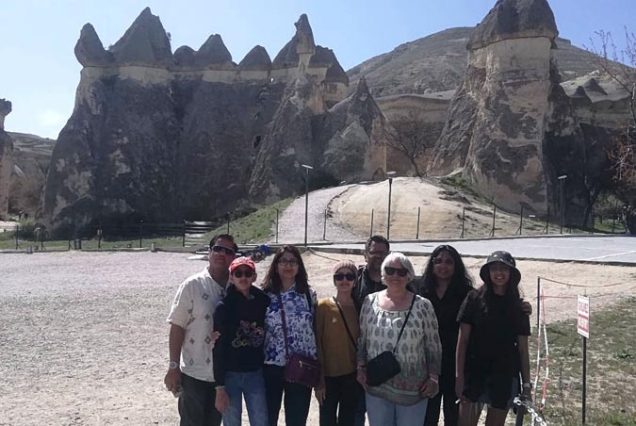
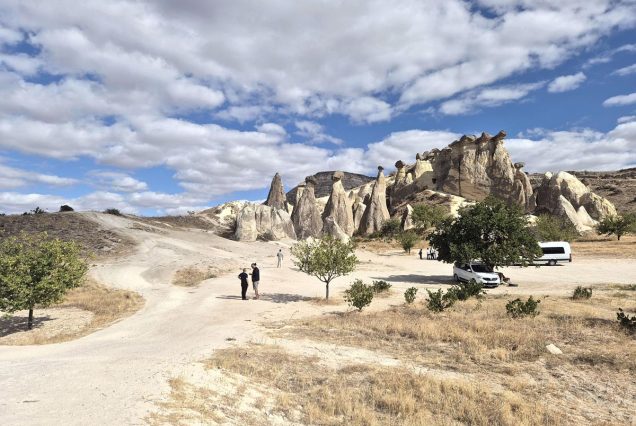
A short drive brings you to Paşabağ, where the fairy chimneys reach their most dramatic expression. Multi-headed pillars with dark capstones loom over vineyard terraces, and hermit cells carved into the upper reaches of these columns hint at the austere spiritual life that once thrived here. The chapel of St. Simeon, tucked inside a triple-headed chimney, is a miniature marvel — a reminder that in Cappadocia, architecture and landscape are inseparable.
Zelve Open Air Museum — The Ghost Town
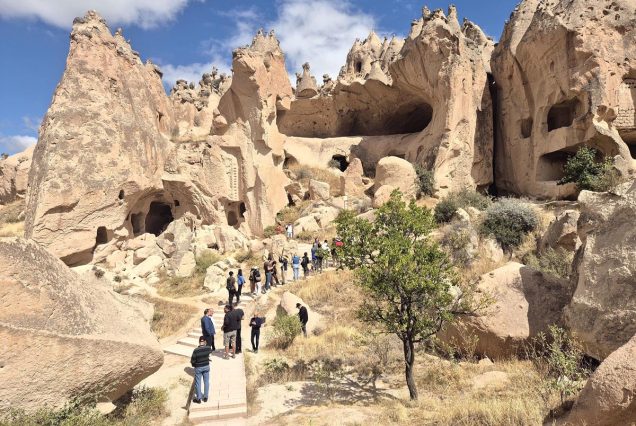
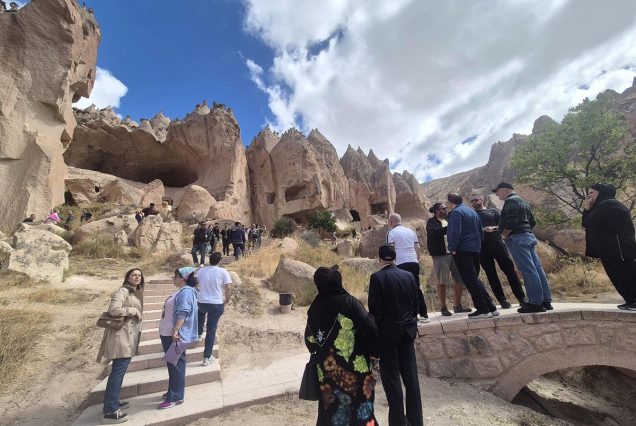
Zelve is the Mix Tour’s secret weapon. While most visitors to Cappadocia flock to Göreme’s painted churches, Zelve offers something rawer and arguably more moving: a complete troglodyte settlement that was continuously inhabited from early Christian times until 1952, when the Turkish government evacuated its residents due to rockfall risk. Walking through Zelve’s three interconnected valleys, you pass crumbling mosques, a rock-hewn church with faded frescoes, grain stores, wine presses, and pigeon houses — an entire social infrastructure carved into the cliff face.
The absence of crowds at Zelve makes the experience meditative. Sound carries strangely between the rock walls; you might hear nothing but your own footsteps and the call of a kestrel wheeling overhead. Your guide will explain how the community managed water, waste, and defence in this vertical village — practical details that bring the empty rooms back to life.
Love Valley — Cappadocia’s Most Provocative Landscape
Love Valley needs no explanation once you see it. The tall, smooth, conical chimneys that fill this narrow canyon are unmistakably phallic, and the valley’s Turkish name (Aşk Vadisi) leans into the innuendo. Beyond the Instagram moments, however, Love Valley is a genuinely impressive erosion landscape. The columns here are unusually uniform in shape, rising 30 to 40 metres from the valley floor, their pale tuff blushing pink in afternoon light. A short trail along the rim offers elevated views, and if conditions are right your guide may lead a descent into the valley itself.
Avanos — Hands in Clay
Lunch in Avanos is followed by a visit to a ceramics workshop. The town’s pottery tradition stretches back to Hittite times, sustained by the iron-rich clay of the Kızılırmak River. Watching a master potter shape a vessel on a traditional kick-wheel is hypnotic — the precision of hands guided by decades of muscle memory. You’ll have the opportunity to try the wheel, and the resulting lopsided bowl will become one of your favourite travel souvenirs.
Göreme Panorama — The Big Picture
The day closes at the Göreme panoramic viewpoint, where the entire fairy-chimney basin spreads below you. From this elevation, the logic of the landscape becomes visible: the dark mesa of harder rock on the horizon, the softer layers carved into valleys and pillars below, and the human settlements nestled into every available crevice. As the light softens toward late afternoon, the tuff shifts from cream to gold to amber — a colour sequence that photographers call “Cappadocian magic hour.”
Who Should Book the Mix Tour?
The Mix Tour is ideal for travellers with limited time who refuse to compromise on variety. If you can spare a second day, consider pairing it with the Cappadocia Highlights Tour to catch Göreme’s painted churches and Uçhisar Castle, or the Cappadocia South Tour to explore the underground cities and rose valleys that this itinerary doesn’t reach.
You May Like
Cappadocia North Tour
Cappadocia Highlights Tour
Cappadocia Red Tour
Cappadocia South Tour
Reviews
There are no reviews yet.