
Why They Call It the Red Tour
Every destination has a tour that locals consider non-negotiable — the one they recommend when a visitor has exactly one day and asks “what should I do?” In Cappadocia, that tour is the Red Tour. Its name comes from the predominant hue of the volcanic tuff in the northern valleys: iron oxides in the ignimbrite lend the rock a warm, ruddy tone that deepens to cinnabar at sunset. But the name has also become shorthand for the essential Cappadocia experience — the route that covers the region’s most celebrated sites in a single, well-orchestrated day.
Hotel pickups begin in the early morning across Göreme, Ürgüp, Avanos, and Uçhisar. Your guide — licensed, English-speaking, and deeply familiar with every cliff and chapel on the itinerary — sets the pace for a day that balances structured commentary with genuine free time at each stop.
Göreme Open Air Museum — The Anchor of Every Red Tour
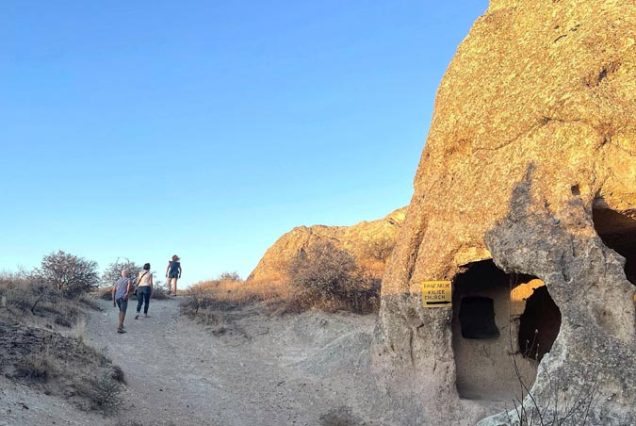
The undisputed centrepiece of the Red Tour is the Göreme Open Air Museum, a concentration of rock-hewn monasteries and churches that earned UNESCO World Heritage status in 1985. What makes Göreme extraordinary is not just the age of its structures — 10th to 12th century — but the survival of their interior decoration. Frescoes depicting the life of Christ, the saints, and scenes from Genesis cover walls and barrel-vaulted ceilings in colours that still sing after a millennium.
The Tokalı Kilise (Buckle Church), slightly downhill from the main complex, contains the most extensive fresco cycle in Cappadocia. Its indigo-blue backgrounds — achieved with lapis lazuli pigment, an almost absurd extravagance in a monastic setting — suggest that this was a church of considerable importance. Your guide will explain the theological narratives panel by panel, transforming what might otherwise be a blur of Byzantine imagery into a coherent visual story.
Devrent Valley — The Imagination Playground
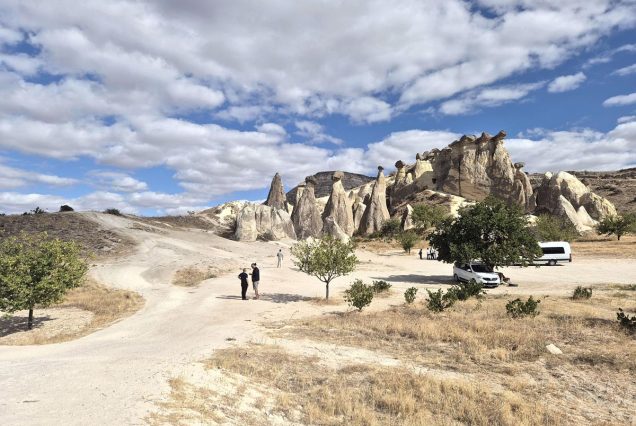
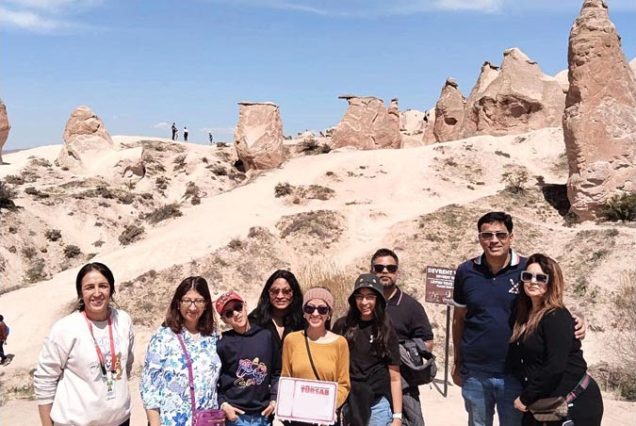
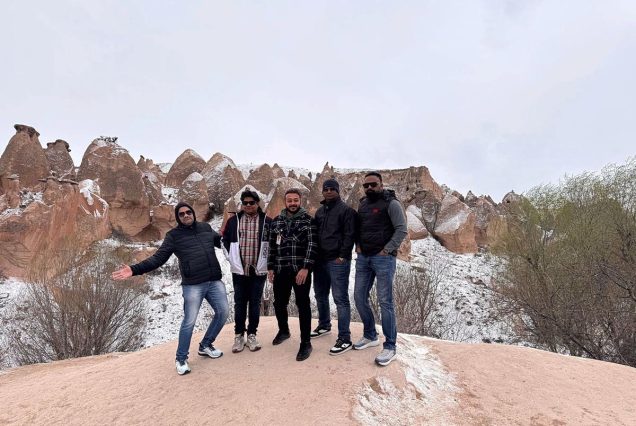
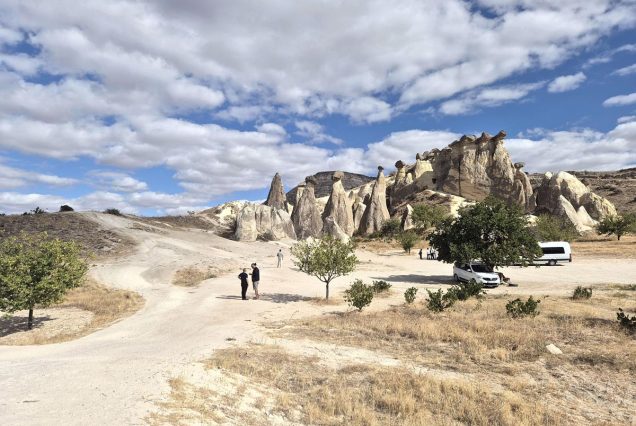
After the reverent hush of Göreme’s churches, Devrent Valley offers a change of register. There is nothing sacred here, nothing man-made — only the slow-motion comedy of erosion sculpting volcanic rock into shapes that look like animals, faces, and objects. The famous “camel rock” is the valley’s mascot, but dozens of other formations compete for your attention. Your guide will point out the most popular resemblances, then invite you to find your own. It’s a surprisingly engaging exercise that turns geological observation into a game.
For photographers, Devrent offers clean compositions: isolated pillars against a blue sky, textured cliff faces catching raking light, and a colour palette that ranges from bone white to burnt sienna depending on the mineral content of each stratum.
Paşabağ — Monks and Mushrooms
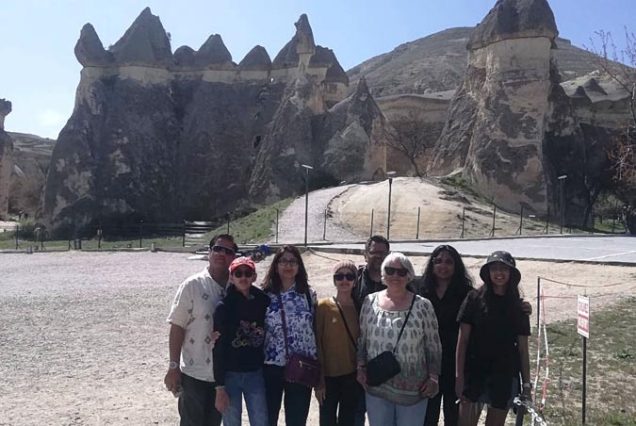
Paşabağ (Monks Valley) is where fairy chimneys achieve their most theatrical form. Triple-capped columns rise from vineyard terraces, their dark basalt hats perched at improbable angles on slender stems of pale tuff. Christian hermits carved cells and a small chapel into these pillars during the early Byzantine period, seeking the isolation that Cappadocia’s landscape provides in abundance.
A gravel path loops through the main chimney field, with informational panels explaining the formation process. The key ingredient is differential erosion: the hard capstone resists weathering, shielding the softer column beneath. When the cap eventually cracks and falls, the exposed column erodes rapidly — a geological clock visible in the varying heights and states of decay across the valley.
Avanos — Lunch and Living Tradition
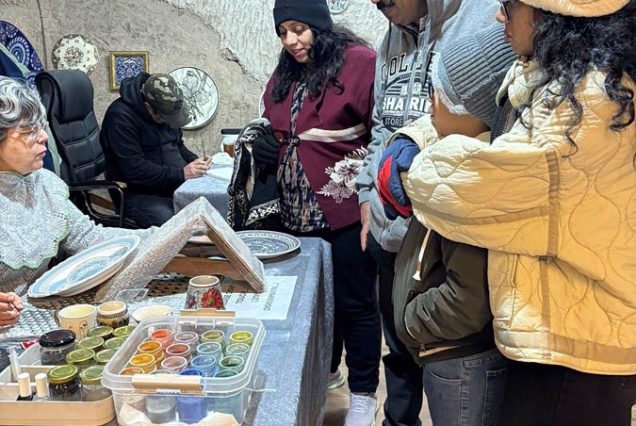
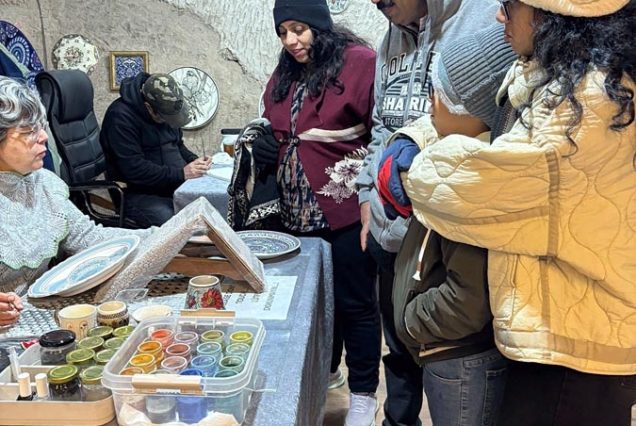
The midday break takes place in Avanos, a riverside town whose identity has been shaped by clay for four millennia. The Kızılırmak River deposits iron-rich sediment along its banks, and generations of potters have turned that sediment into everything from utilitarian storage jars to decorative tiles. You’ll visit a workshop where the traditional kick-wheel is still in daily use, and you’ll have the chance to try your hand at centering a lump of clay — an exercise in humility that deepens your appreciation for the master’s casual virtuosity.
Lunch features Cappadocian cuisine: the region’s famous testi kebab, fresh salads, flatbread, and strong Turkish tea.
Zelve Open Air Museum — Life After the Last Resident
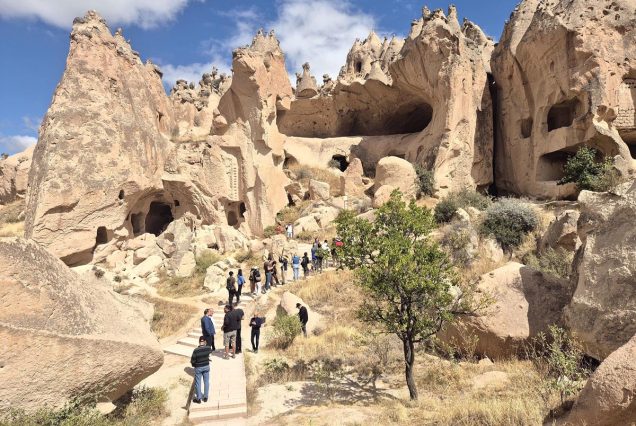
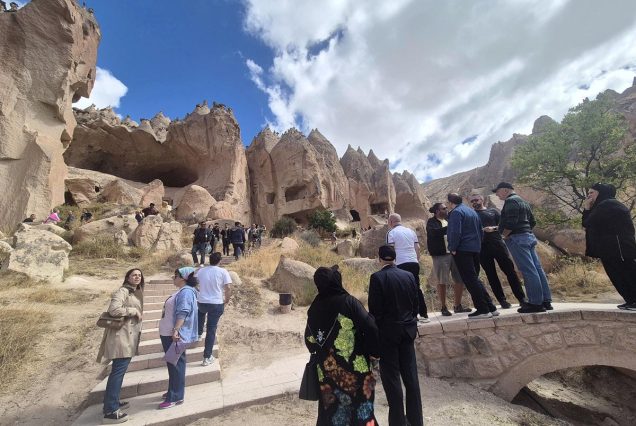
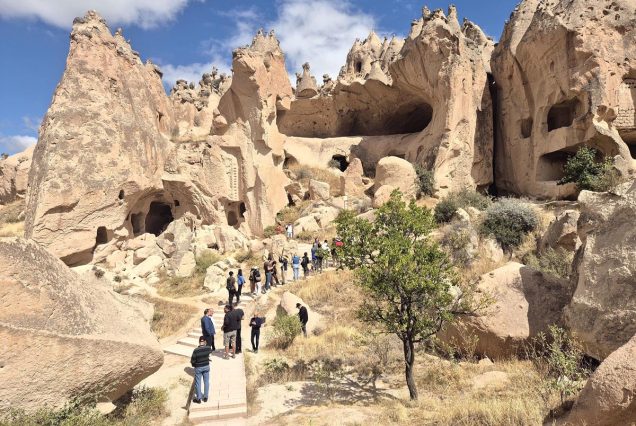
Zelve is the Red Tour’s most atmospheric stop. Unlike Göreme, which is primarily a monastic complex, Zelve was a functioning village — a community of farmers, craftspeople, and families who lived in rock-cut houses until the mid-20th century. The Turkish government relocated the population in 1952 after engineers determined that the cliff faces had become dangerously unstable, and the village has stood empty ever since.
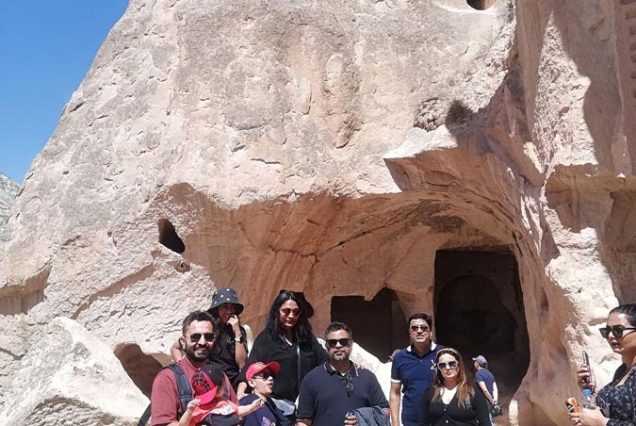
Walking through Zelve’s three interconnected valleys is a quietly powerful experience. You pass abandoned homes with smoke-blackened ceilings, a small mosque with a carved mihrab, a church with faded frescoes, and dozens of pigeon houses — the birds’ droppings were a valued fertiliser. The silence and scale of the place convey something that polished museum displays cannot: the texture of daily life lived inside stone.
Uçhisar Panorama — The Final Frame
The Red Tour closes with a panoramic stop near Uçhisar, where the full sweep of Cappadocia’s northern landscape arranges itself below you. Fairy-chimney valleys, green orchards, and the distant cone of Erciyes Dağı compose a farewell image that justifies every superlative ever written about this region.
What Comes After the Red Tour?
The natural sequel is the Cappadocia South Tour, which explores the underground cities, rose-coloured valleys, and abandoned Greek villages on the opposite side of the region. Travellers who prefer to cover both sectors in a single day should consider the Cappadocia Mix Tour, which samples highlights from both routes. For a premium experience with Uçhisar Castle access and a pottery workshop, the Cappadocia North Tour adds depth to the same geography.
You May Like
Cappadocia South Tour
Cappadocia Highlights Tour
Cappadocia Mix Tour
Cappadocia North Tour
Reviews
There are no reviews yet.